

For a detailed blog post on the history behind Semla, please click an earlier post:
Spring Time is Semla Time (March, 2024)
This post is a short memoir about my first time tasting this mouth watering delicacy.
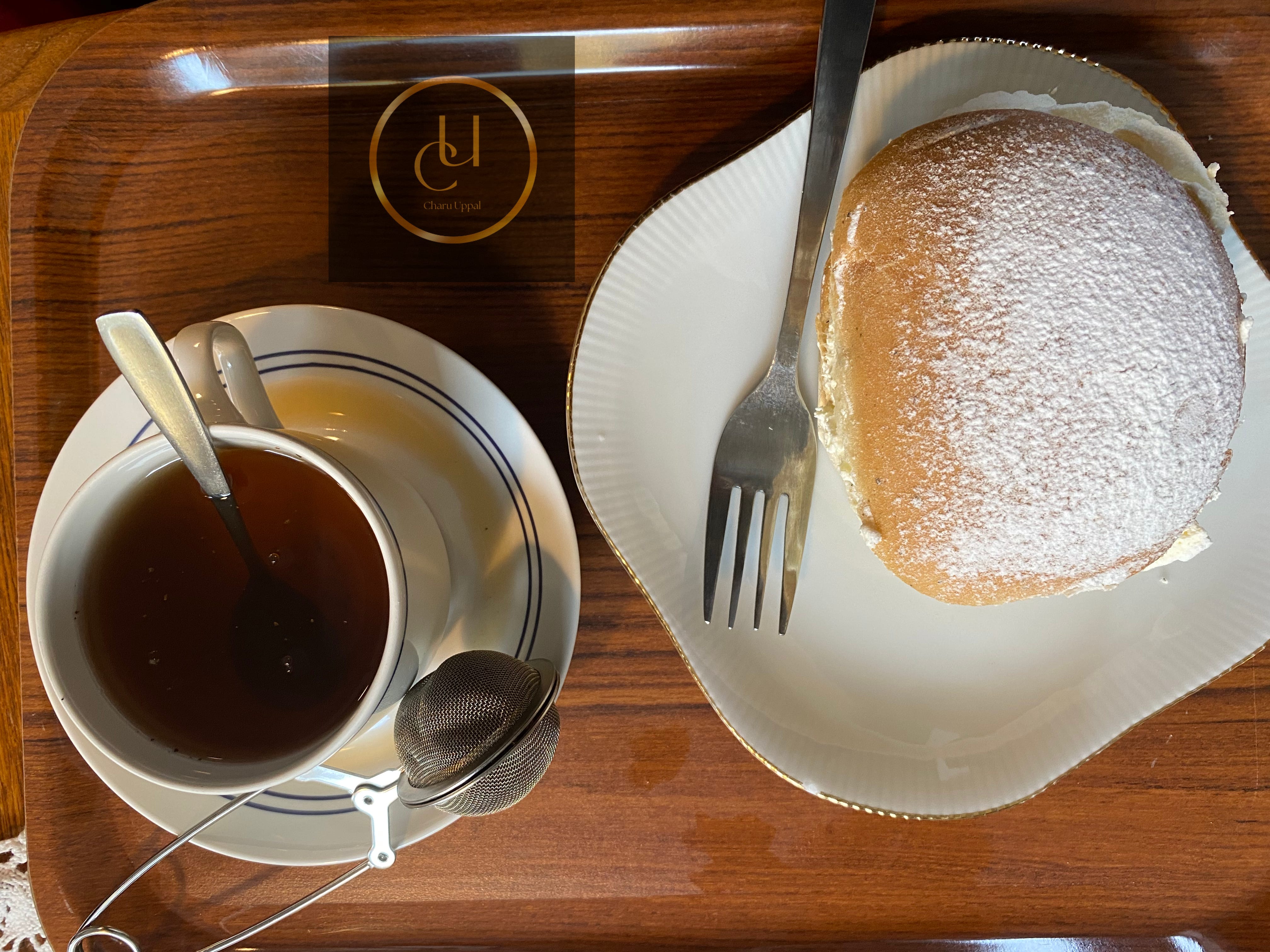
A Scandinavian Fika Awakening
It was my first year in Sweden, and I was still learning the rhythm of Fika—the cherished Swedish coffee break. I had joined a few Fikas at my office, slowly getting used to the rotation system, where forgetting your turn would earn some playful scolding from colleagues. Fika was every Wednesday, a small ritual of coffee, cake, and conversation. But nothing prepared me for what happened one chilly Tuesday morning when I received an email that simply said: “Semla time.”
I didn’t understand. Curious, I gathered with my colleagues in the usual corner where we had Fika. My eyes widened at the sight of boxes stacked with round, seemingly ordinary buns. Nothing like bright tropical fruits I was used to having in Fiji for coffee breaks.
We were asked to serve ourselves. The friendly chatter floated around me in “Swinglish”—a mix of Swedish and English. I could catch the English words, but the Swedish ones danced just out of reach. Outside, the snow was thawing, the air crisp and biting, and I, a recent arrival from Fiji (and India1), was feeling the stark contrast of Scandinavian winter.
I, a tea drinker in a coffee nation poured myself a cup of tea, even though I was tempted by the aroma of the dark brew. I carefully placed a bun on my plate, surprised to notice its lightness. While lifting it, my eyes marvelled the mound of whipped cream hidden inside. Hoping no one noticed, I dipped my finger in and tasted it. The cream was barely sweet. “Dig in,” someone encouraged. I grabbed my fork, cutting a piece with cream and all, and stuffed it into my mouth.
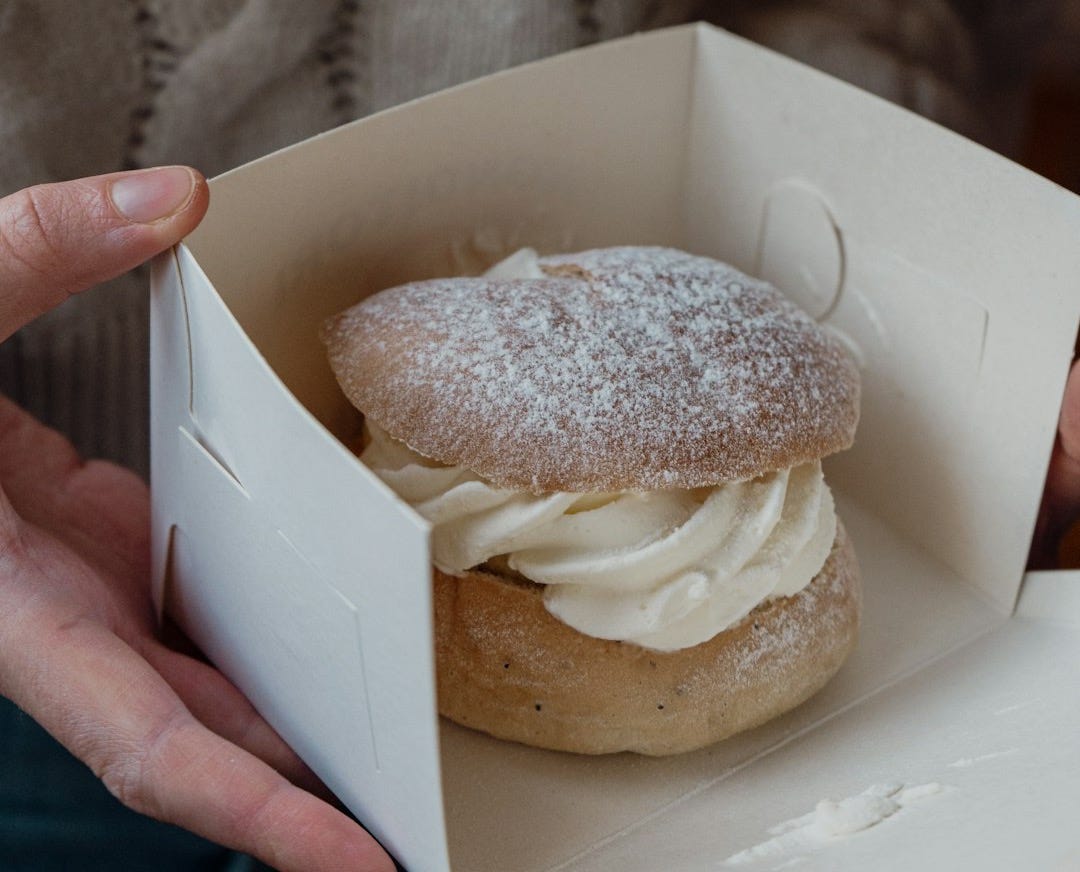
My colleagues watched in anticipation as I took my first real bite.
Immediately, my taste buds erupted. The bun was mildly sweet and fragrant with cardamom, the whipped cream airy and soft, and then—suddenly--the almond filling burst in, intensely sweet and nutty. “What is that?” I asked, wide-eyed. My colleagues laughed and explained, “Mandelmassa.”2 Before they could finish, I was reaching for the second, then the third bite.
“This is called a semla,” they told me.
In that moment, all of it made perfect sense. Semla was light and fluffy, like the hope of spring, sweet like the fleeting beauty of cherry blossoms, and the cardamom-scented bun was warm and comforting, like a long evening spent in front of a crackling fireplace. Semla was not just filling, but made me feel hopeful on that cold February day. I felt content, enchanted, and entirely at home in this little Scandinavian corner.
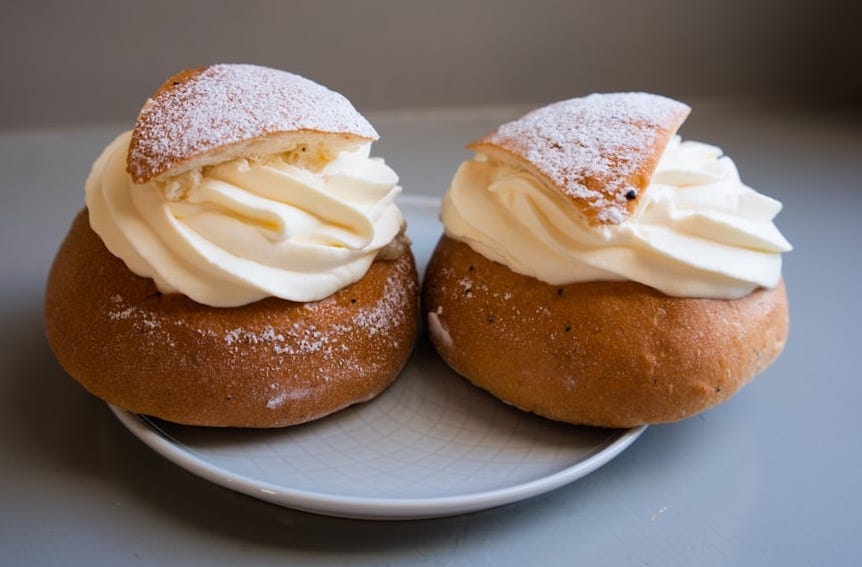
The simple snack transformed the small staff room into a slice of heaven. The Semla3 became my favorite treat. I was so inspired that I researched and blogged about it, and even hope to make a short film capturing that magical first bite.
A simple bun, whipped cream, and almond filling transported me into the heart of Swedish culture, one divine bite at a time.
Be sure to try one if you visit Sweden in Springtime.
I had stopped for a few months in India before moving to Sweden.
Marzipan
If in Sweden now, fresh Semla is available at cafe’s and pre-made ones in grocery stores. Semla sales used to stop once lent began, but in our days of commercialization, they are sold until Easter. Semlor are also (usually) available at IKEA stores.