

NOTE: One of the (many) reasons I haven’t written in a while is that I wanted to rework my last post on Time and New Year Celebration. It felt disjointed and needed more information, including better transitions between paragraphs.
That post was written in haste—partly because there is just so much to say. A few of my friends have asked me about the New Year:
“But on January 1, doesn’t the Earth complete one orbit around the Sun? That’s why it’s the New Year, right?”
It’s true that the Earth is always moving, but there’s an important distinction. The Earth rotates on its axis every day, which gives us day and night. Its orbit around the Sun, however, takes one full year—about 365 days and 6 hours. That extra fraction of a day is why we add a leap day every four years.
So while January 1 marks the start of the calendar year, the Earth doesn’t do anything “special” on that exact day—it’s just that by this date, it has completed one full orbit since the same date last year. Every day involves a tiny bit of orbital motion, and by the same date next year—say, January 2, 2026—it will have completed another full orbit, with roughly 365 rotations along the way.
The previous article will be worked in time and reposted, with some extra information.
For now, something I notice and often think about.
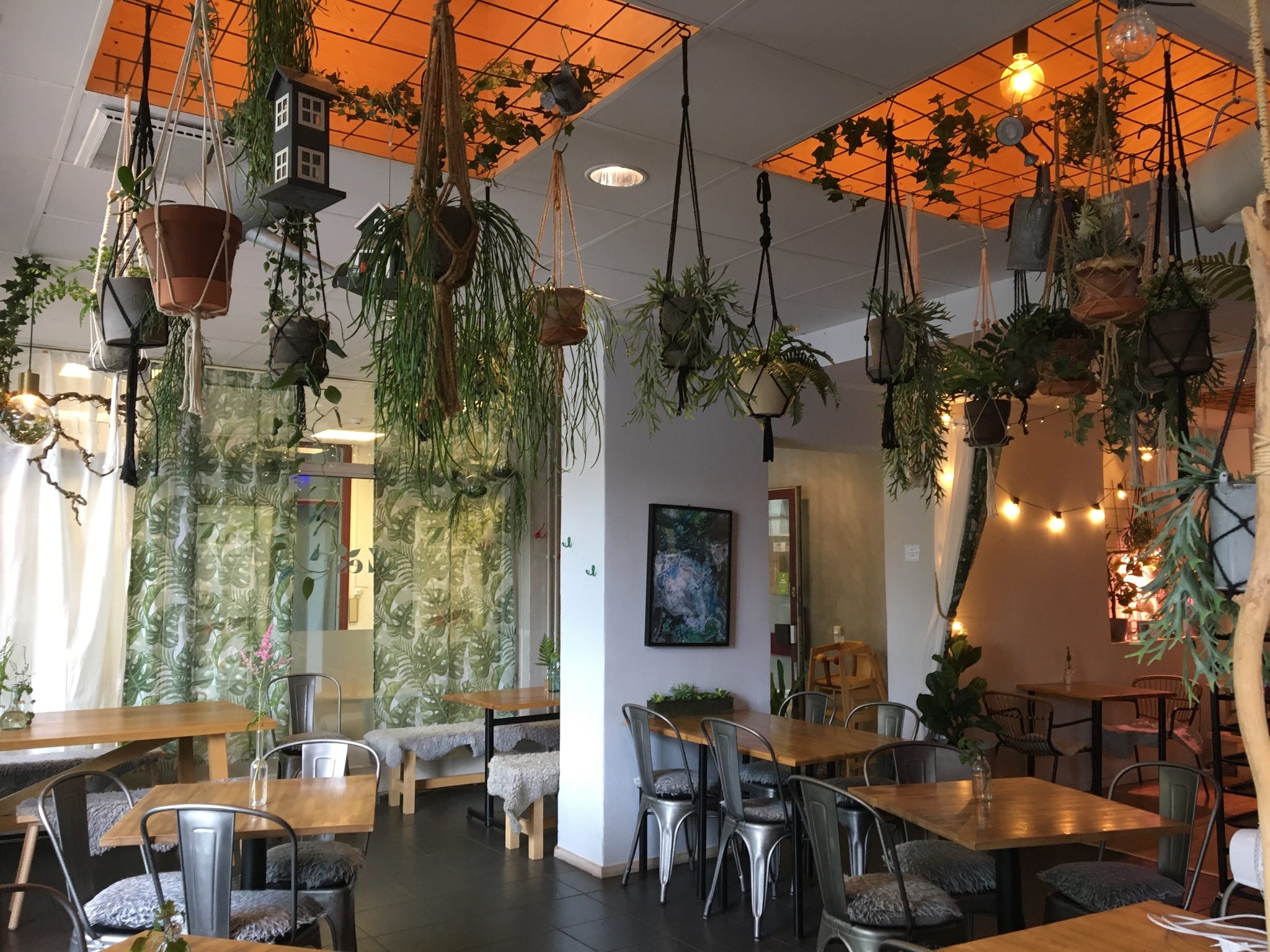
Here is a picture of a vegetarian restaurant. Notice how beautifully plants have been incorporated without taking space or interfering with the seating arrangement, in this small restaurant. Creates a unique design. Even though the restaurant is really small, this special attention to aesthetics of a place, makes it inviting for the customers.
Swedish Design
One of the first things you notice about Sweden is its cleanliness, and organization, which is very evident in its design of public spaces.
The “secret” of Swedish design lies in restraint guided by ‘Swedish values’ rather than trends. It prioritizes function, clarity, and quiet beauty, with an understanding that the country experiences long winters with extended periods of limited daylight. A Swedish emphasis on equality and straightforwardness finds its way into design and manifests as practicality.Objects are meant to be lived with, not simply admired.
This is why Swedish design often feels calm and timeless. There is a combination of neutral palettes with a splash of bright colors, natural materials with artificial light, clean lines, and an absence of unnecessary ornament. Plants both real and artificial are found in abundance at public places, to the extent, it seems like mini forests have been created in corners. But nothing is meant to dominate a space. Everything is meant to belong.
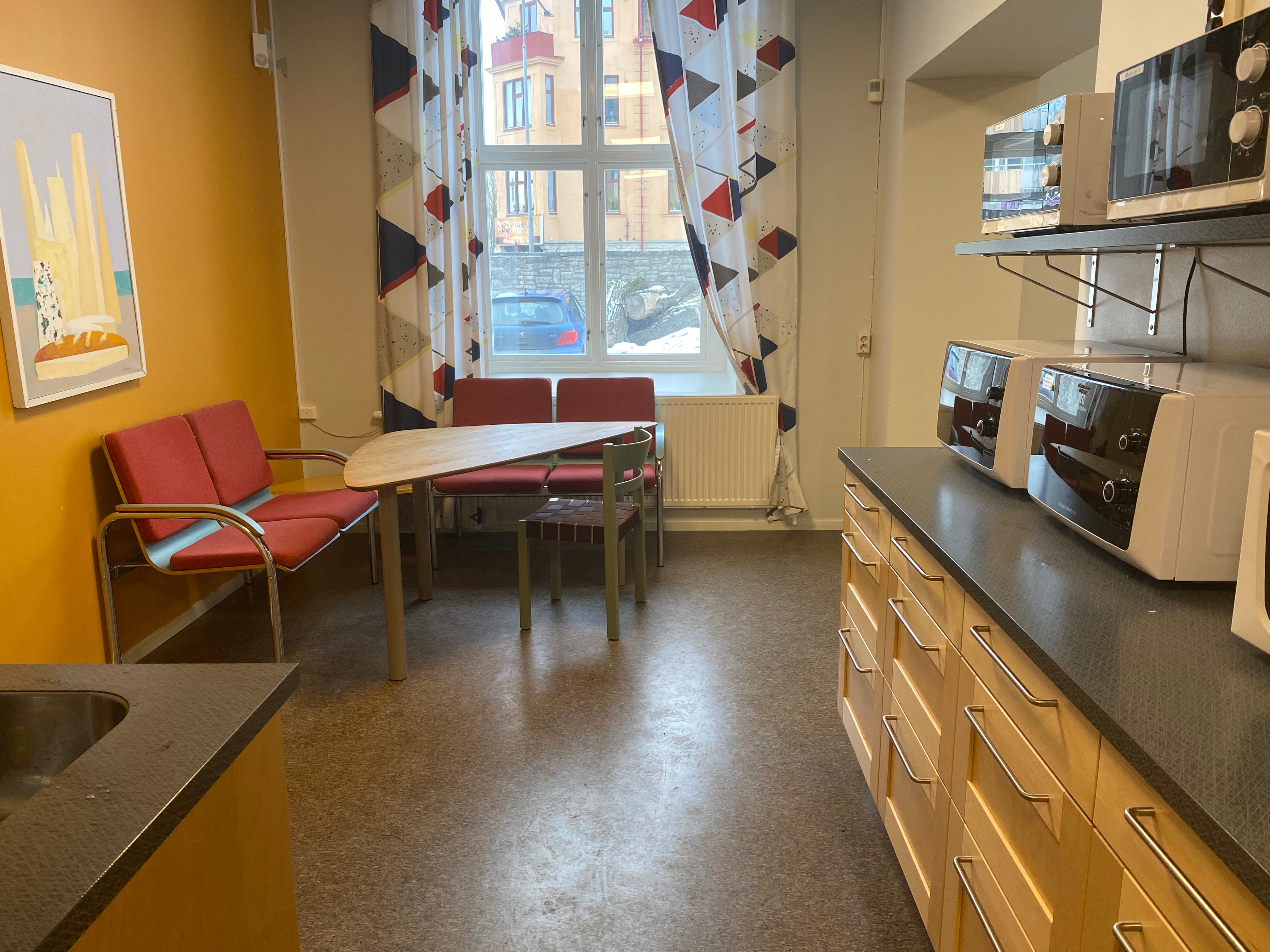
Believe it or not this is a small section of a ‘kitchen’ to be used by students at a university. Notice the microwaves and a classic yet unique seating style.
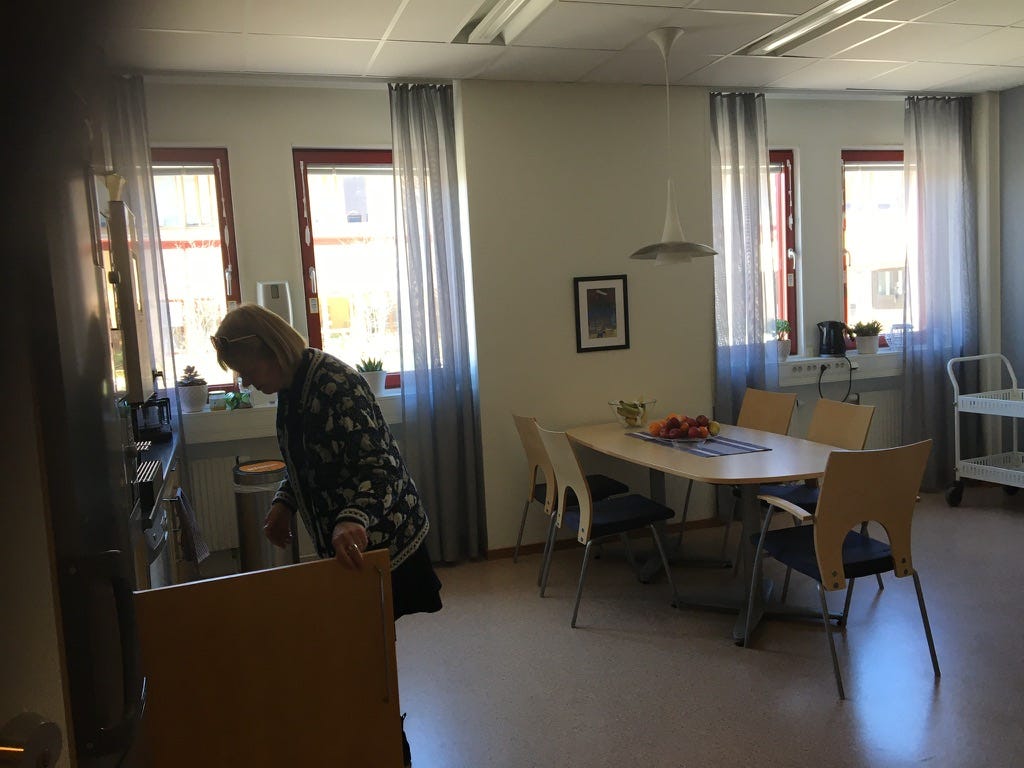
This is another kitchen. Depending on the size, there can be several kitchens and seating areas on one floor in a public building.
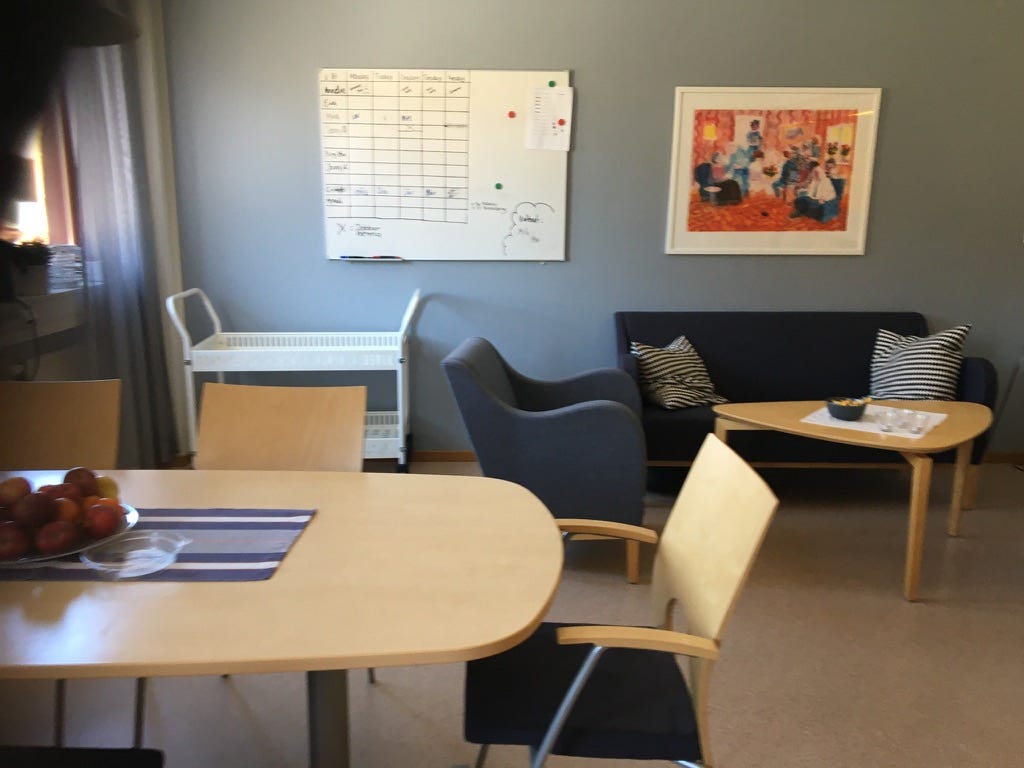
There is a clear underlying understanding that these places are also meeting places for colleagues and can support staff bonding. So each area is well lit, with large windows and comfortably pleasant seating area.
Origin of Design Philosophy?
There are many Swedish concepts that can be described here, but one that is usually pointed to - is the Swedish idea of lagom—roughly translated as “just the right amount.” In Lagom: The Swedish Art of Living a Balanced, Happy Life (Niki Brantmark), this mindset is described as a guiding principle not just for lifestyle, but for design itself enough light, enough space, enough comfort—never excess.
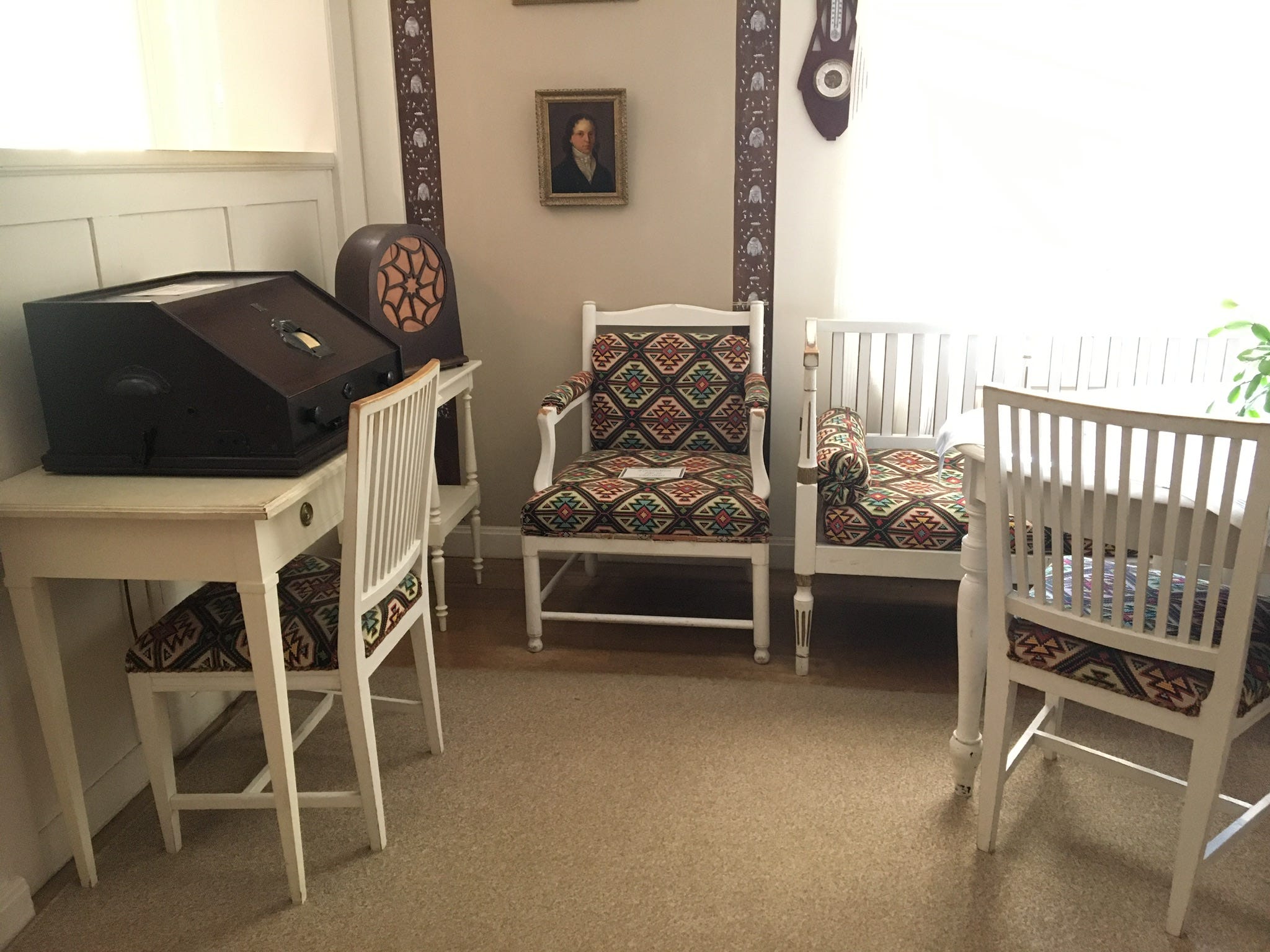
House of the famous Swedish Nobel Laureate (1909) Author, Selma Lagerlöf. Comfort, design, color and light have always been a part of Swedish design.
In Scandinavian Design, Charlotte and Peter Fiell show that Swedish design did not emerge from a desire to impress, but from a commitment to serve. Design was seen as a democratic tool—good objects should be available to everyone, not just the wealthy. This belief pushed designers to value craftsmanship that could be reproduced at scale, marrying quality with affordability. Modernism, with its clean lines and rejection of excess, wasn’t adopted as a style choice so much as a moral one. It was a moral responsibility to create spaces where people feel welcome.
Remove what isn’t necessary. Keep what is purposeful. Clean, organize and humanize.
This is why Swedish design rarely demands attention. It doesn’t rely on spectacle or bold gestures to prove its worth. Instead, it earns trust over time—through comfort, durability, and how naturally it fits into daily life. The chair feels right, the lamp gives the right light, the room breathes. Swedish design doesn’t shout because it doesn’t need to. Its confidence lies in how quietly and consistently it works.
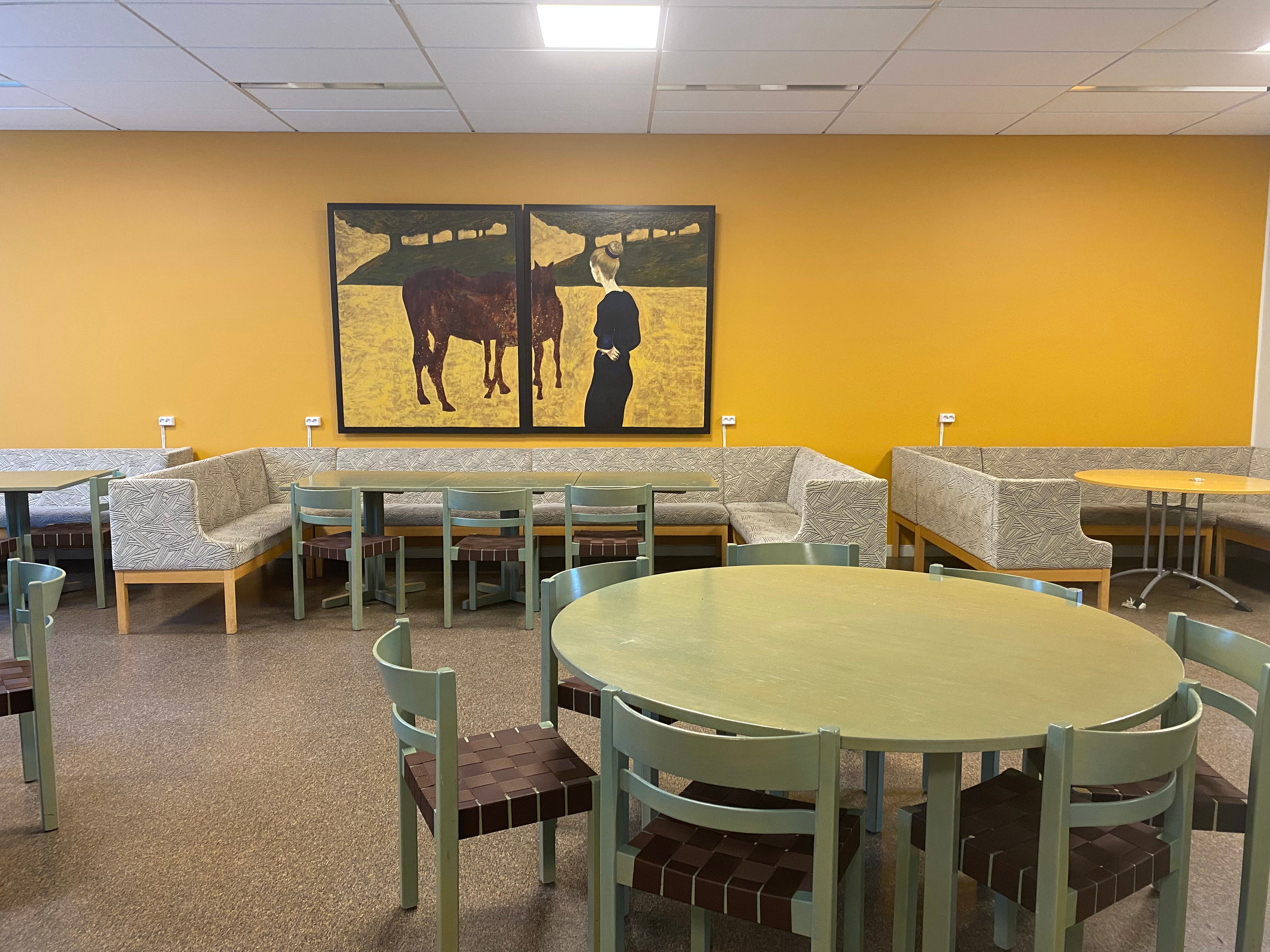
Another seating area in a University. You fill find students resting, doing their school work, having lunch during school days. Unlike the US where I saw people purchased lunch everyday, in Sweden it is common for people to bring their own lunch.
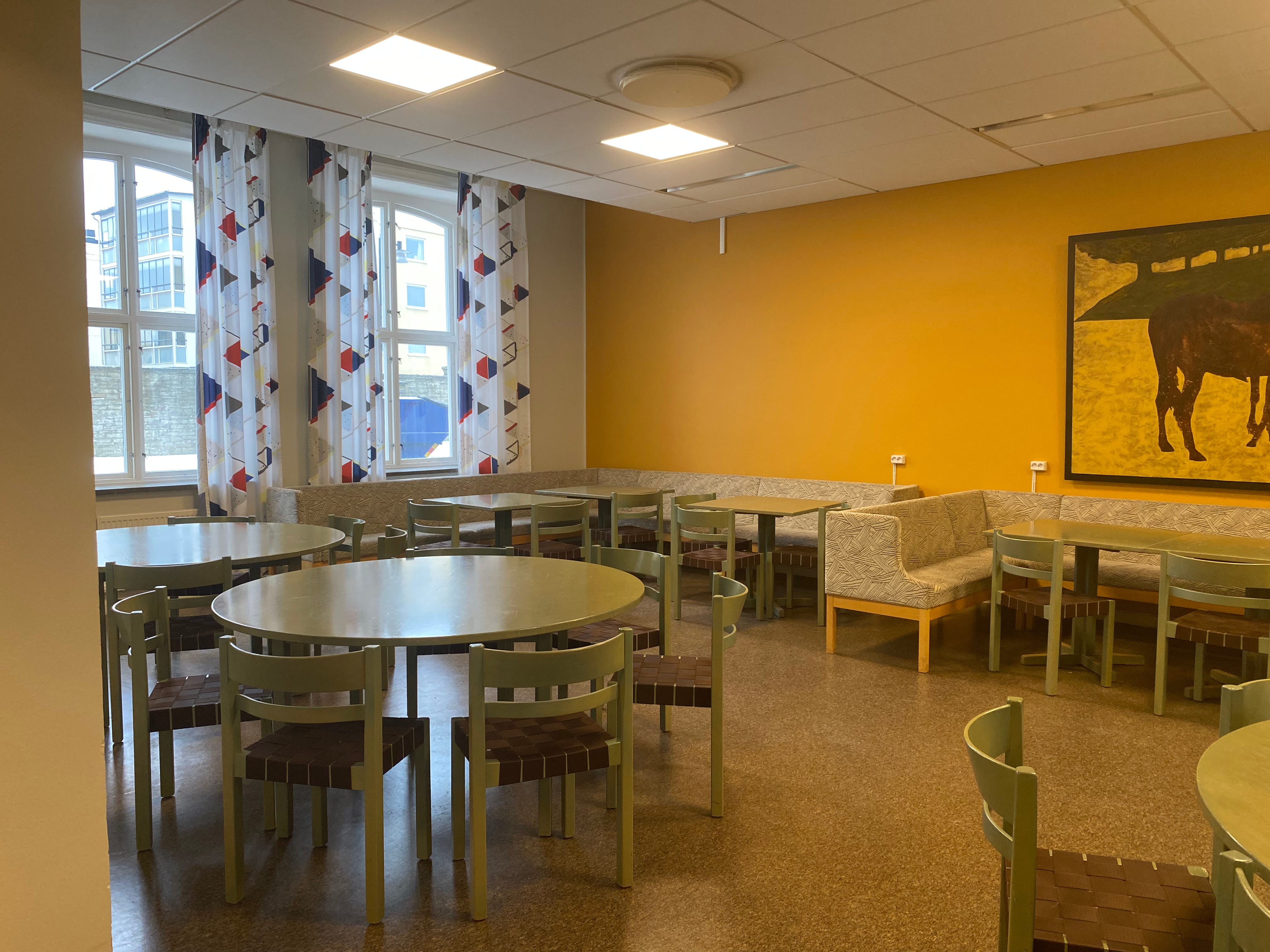
I have worked at, studied at and given lectures at several universities, in several countries. Sweden stands out as the best in design, comfort and elegance! Go IKEA!
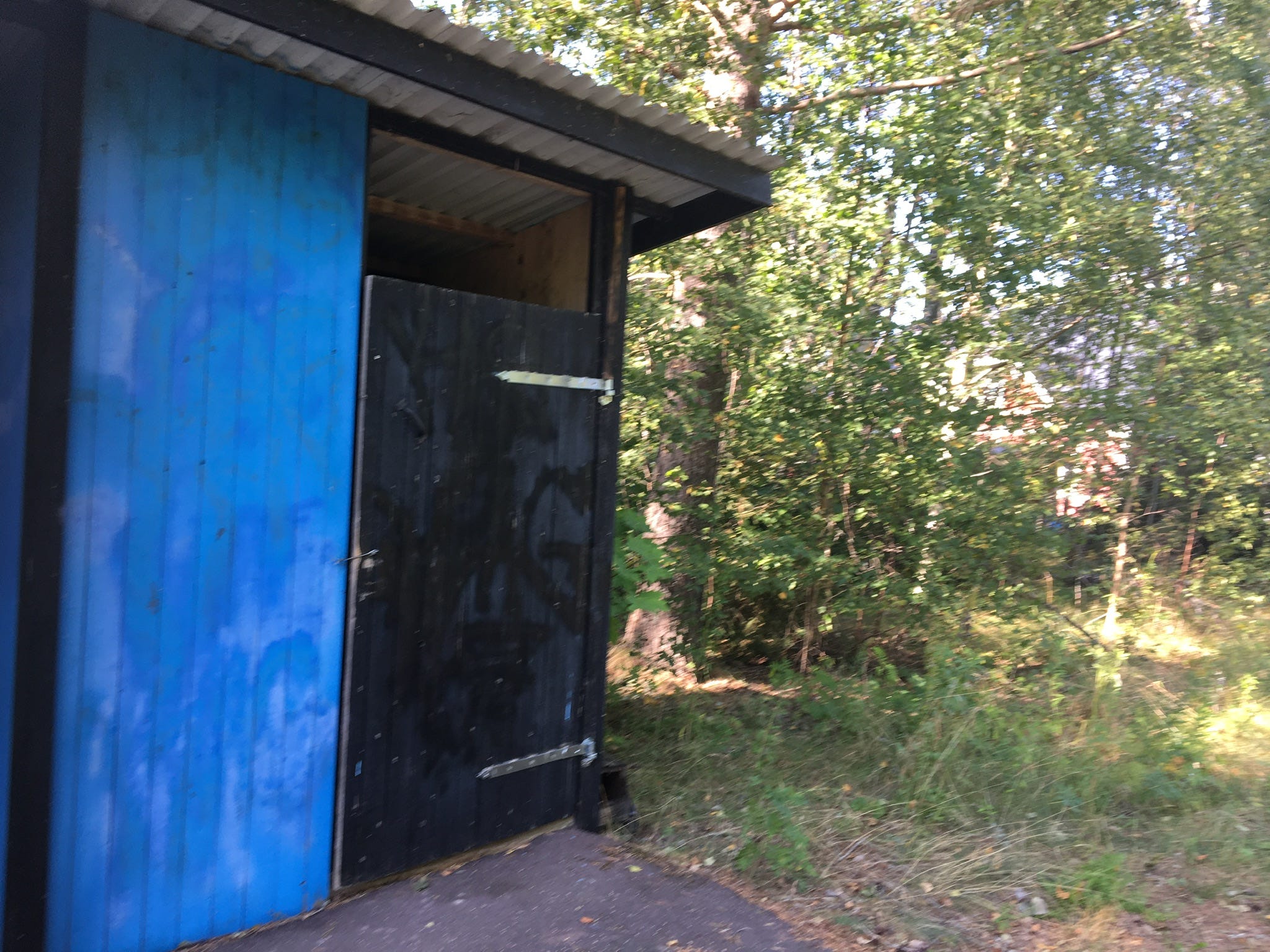
Public toilet (latrine. style) on a road meant for bikers. Below is the picture from inside. It is large enough to bring the bike inside.
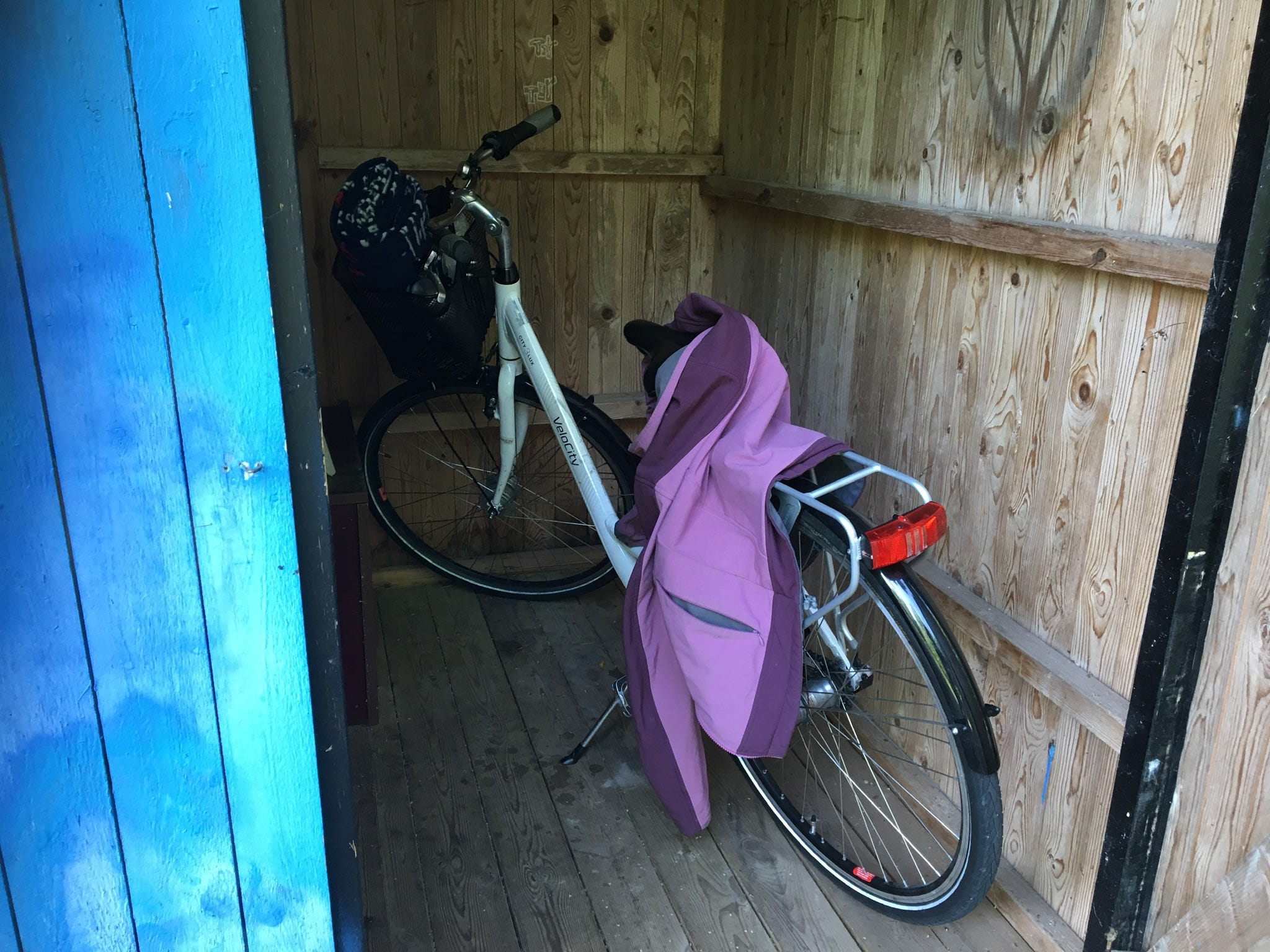

Extra supplies are always available. not just because the state takes care but also because Swedes have an excellent civic sense.

There is a chain on the side for older people, or those with possible knee problems.

A hook for hanging your bag so you do not have to put it on the ground. Remember this is just a toilet in the woods.

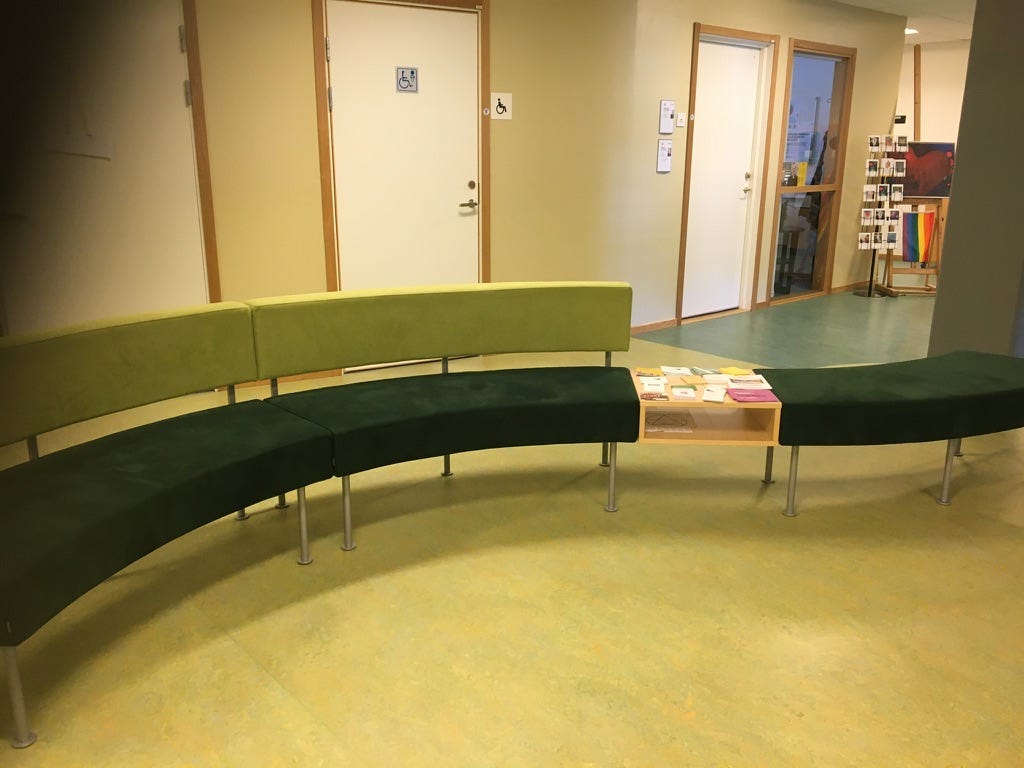
Seating area for staff and students. However, this is right outside the teacher offices and is next to the staff kitchen.
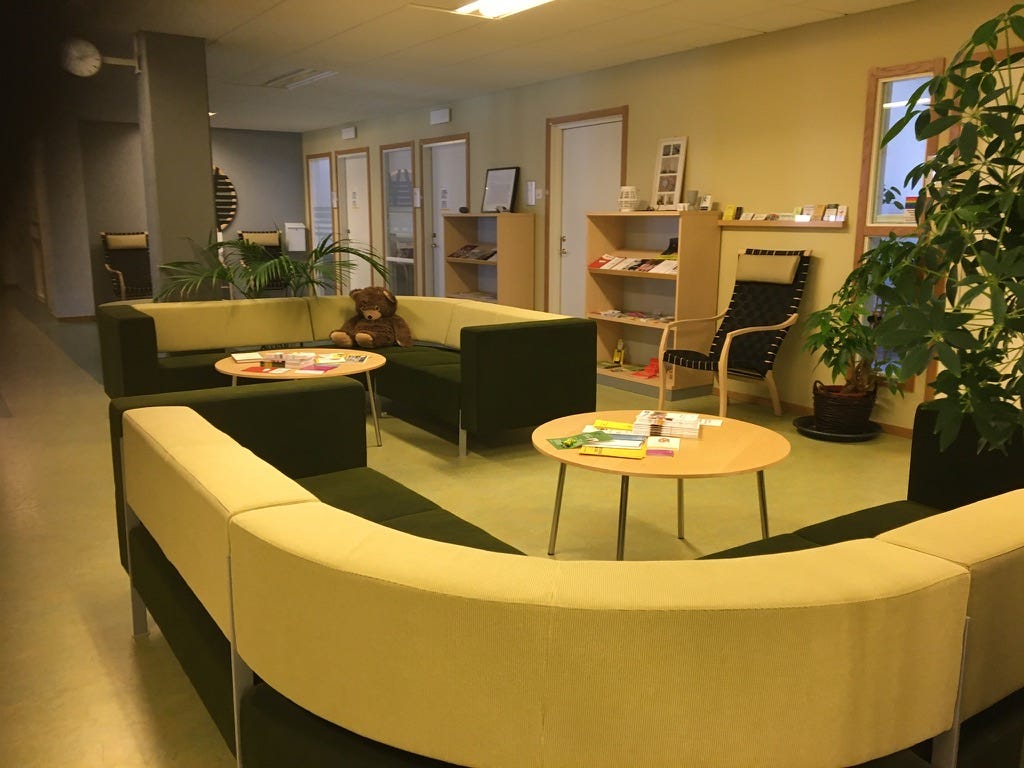
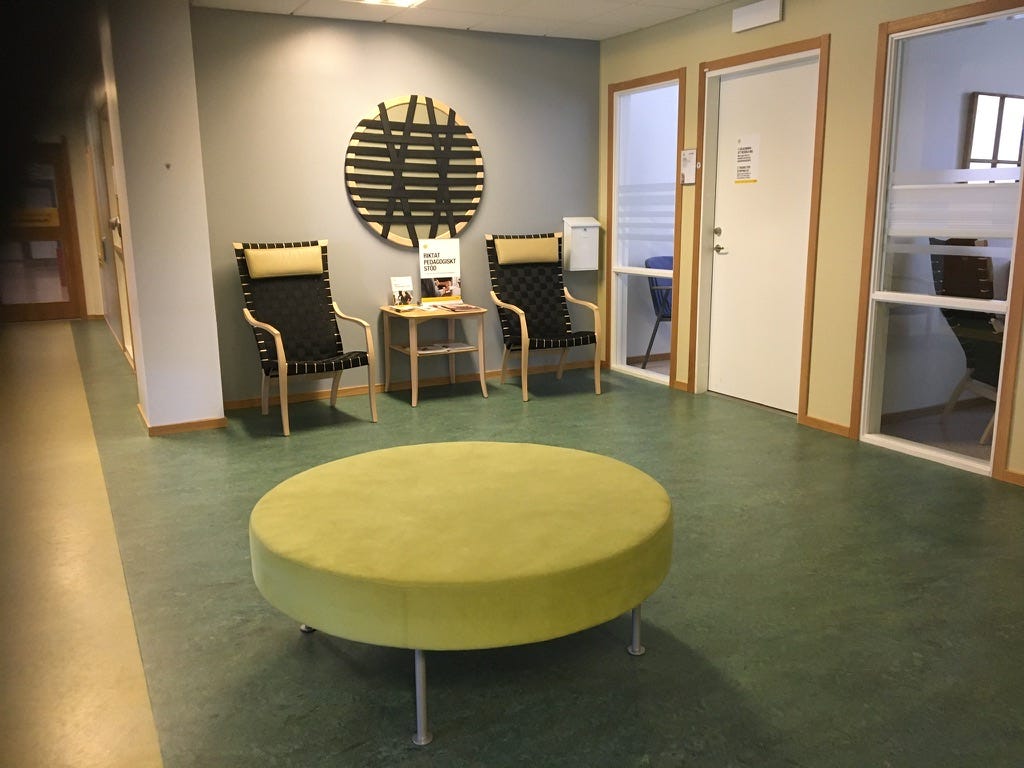
Notice, both design and color combination.
The picture below shows the kitchen that is to the side of this sitting area.
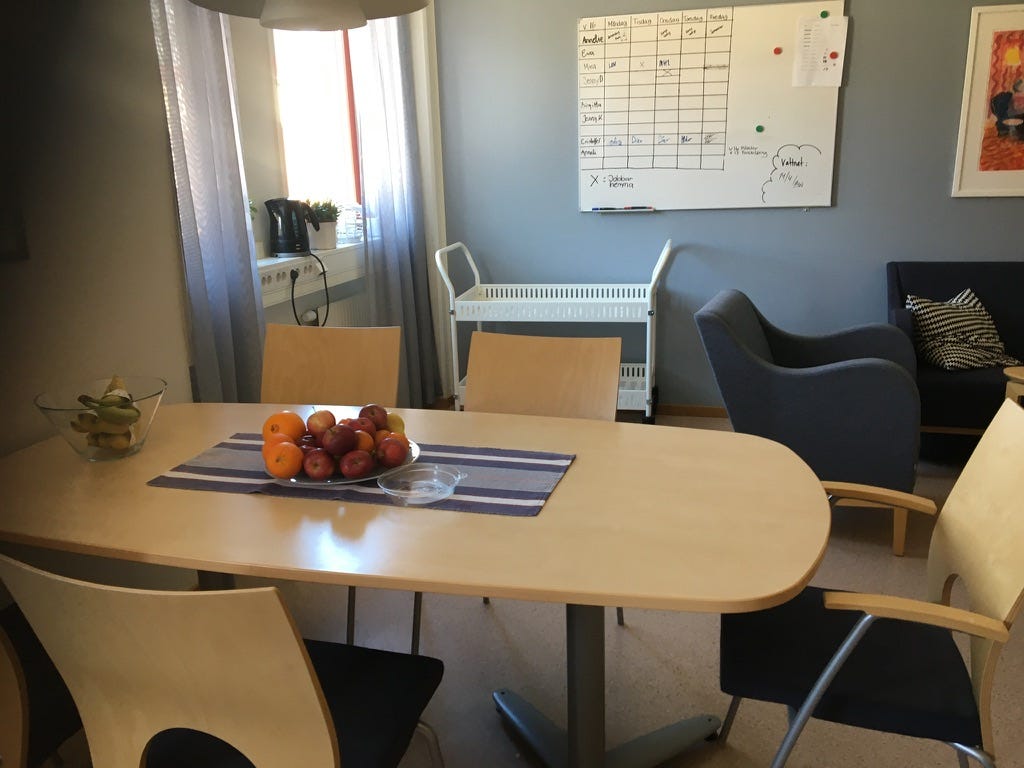
This is another image from different angle of the same kitchen shown above. Depending on the size, there are can several kitchens and seating areas on public buildings. I took this picture to focus on the fresh fruits.
That is also part of Swedish culture. Most grocery stores keep free apples and bananas for children in a separate basket, with a label ‘take one, Kids’’. Most public offices order fresh fruits as snacks for the staff. Each kitchen usually has a fancy coffee machine with at least ten options, which is free for the staff.
Honoring the Artists
In Sweden, art is treated as a public good rather than a luxury.
Another Swedish wisdom—all public buildings have a small budget dedicated to purchasing art from local artists. So, you will find sculptures, paintings and abstract art all over public places. Some of these artefacts show up only during summer in public parks and by roadsides.
These policies serve two purposes. First, this is a practical way to sustain local artists and integrate art into shared environments where people from all backgrounds gather. One need not travel to see art. Beauty is not separate from daily life. Art is not confined to museums.
Art becomes part of daily routines, shaping how spaces feel and how people relate to them. Over time, this normalizes creativity as something accessible, communal, and valued—quietly reinforcing culture, identity, and equality.
Following is a short video I made years ago on Helsinki airport. In all Scandinavian airports and sometimes train stations, you will find ‘play spaces’, that often provide respite to travel weary parents as children are enamored by the bright colors and often start playing with other children.
Another thoughtful aspect, in many toilets you will find places with two toilets designed for different ages, in the same stall, to help parents of young children.
Mind and Spaces
Calm, open, and thoughtfully designed spaces do more than please the eye—they shape the mind. When light is generous, clutter is absent, and materials feel warm and human, the mind slows down and begins to think more clearly. Such environments invite conversation, reflection, and a sense of ease, making people more open to one another. In workplaces and universities, these spaces quietly encourage collegiality, learning, and staff bonding—not through forced interaction, but by creating conditions where people simply want to stay, sit, talk, and belong.
In the US, staff rooms were much smaller, or non-existent in some smaller universities. The kitchen, if available, had barely one or two microwave ovens and could accommodate only three or four people. Fiji was a different story. In Fiji, open spaces are abundant, and the climate is warm. I saw only three staff rooms in India. One as a student teacher, one as a school teacher and one in my undergraduate college. They varied in size but there was no particular attention given to the aesthetics. The one in Botswana was fairly large with big windows with well painted frames, but I do not remember work space, or extra comfortable seating. It was surely neat and clean, and functional. In the UK, people were talking about ‘real estate’ prices being too high to maintain staff rooms.
Life goes on as normal without complaints. People are used to it.
However, when I moved away from Sweden for a short stint, the one thing I kept talking about was ‘design’ and ‘aesthetics’.
The first semester in Sweden I heard a professor complain as soon as he sat down in a chair, “Who designed this?” I had never heard anyone question design of a public place, ever. No one ever expected comfort in public places.
Then you come to Sweden. You quickly realize why Swedish design doesn’t shout for attention—it quietly earns it.
Swedes have simply come to expect comfort and beauty in places where people from all classes mingle.
Another example of how Sweden strives for equality, without compromising beauty.