

Happy All Hearts Day!
The following three posts were published last year around Valentine’s day
For All Hearts : Bollywood’s Style

A new way to sell apples: Happy Valentine’s Day
This month, a new adaptation of Wuthering Heights starring Margot Robbie and Jacob Elordi is releasing worldwide (February 13, 2026). Based on the famous novel, it leans into obsessive passion — a love expressed through emotional excess, the kind that burns everything in its path. On screen, that intensity becomes even louder - color, sound, and performance heighten the ache, turning longing into spectacle. But stories like this are common, and frankly, predictable.

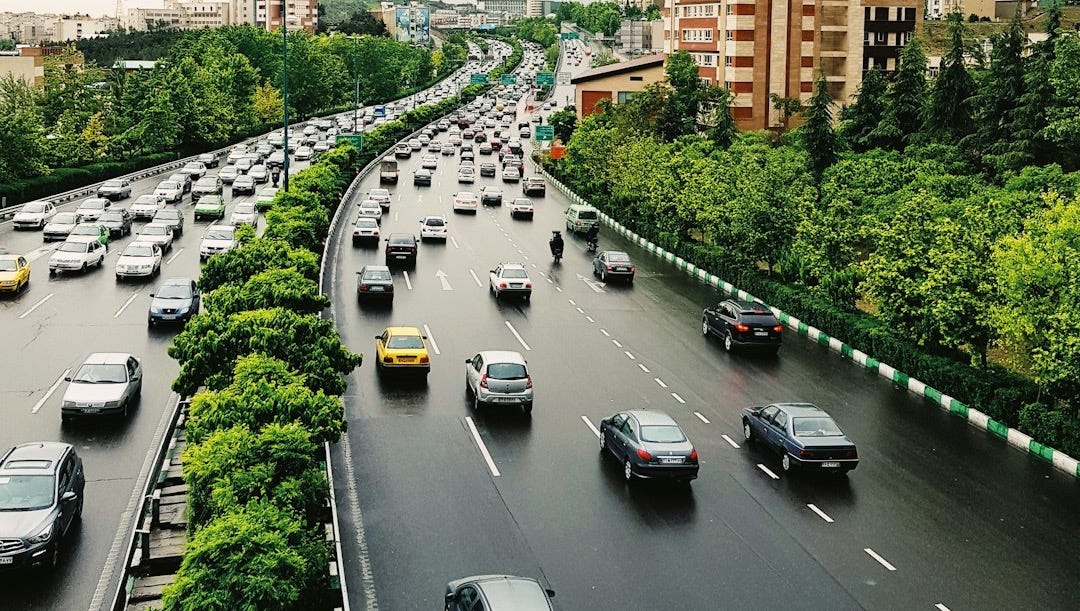
In Persian, Baran means rain, and is a common name for a girl.
Until the late 1990s, Bollywood offered a very different angle on love. Why the 1990s? Because India opened its economy in the early 1990s and allowed collaboration with Hollywood studios. Bollywood was always a bit ‘non-Indian,’ but there was a heavy dose of Indianness injected into the movies, most of which were love stories. Love in Bollywood (and other regions of India) was pure, sweet, and (almost) always attainable despite obstacles. By the end of every movie, the girl and the boy came together, but only after surviving conflicts — personal, social, and familial. And of course, they danced their way through it all. There were happy songs and sad songs, songs of love and songs of separation.

In some ways, these films resembled the musical romantic comedies of 1960s Hollywood, but with richly intertwined moral themes. And Bollywood often carried one theme that Hollywood largely avoided--sacrifice. Love triangles, which were frequent in Bollywood, were resolved not by conquest, but by one person willingly stepping aside. In doing so, the films elevated love beyond romance — beyond something selfish, indulgent, and temporary. Sacrifice turned one-sided love into a moral act, almost a lesson in humanity.
Majid Majidi’s Baran (2001) takes the idea of love through sacrifice even further. It turns the first recognition of love into something almost divine. Baran is the opposite of passion and melodrama. Love in the film begins as recognition, becomes an awakening, survives through sacrifice, and is carried forward with the soft weight of restraint. The secret reveal does not lead to conflict, confrontation or ousting anyone. Instead, it becomes a fulcrum for emotional re-orientation.
Set in Iran, the movie is a love story like no other - because let alone touch each other, the protagonists never even get to look into each other’s eyes. In fact, the girl in the movie never speaks one word.
The story centers on Afghan refugees working in Tehran, displaced by conflicts in Afghanistan. While these events form the backdrop for the characters, Majidi never references the wars directly. Instead, the film focuses on their everyday social and economic struggles. During the 1990s, Iran received one of the highest numbers of refugees in the world, with many crossing on foot from Afghanistan, and others displaced by the wider instability that followed the Gulf War (1990–1991) in the region.

The movie depicts their struggle - long hours, low pay, and above all, humiliation accepted as fate - which makes the story feel intimate, grounded, and, in its own way, universal. This subtle approach lets the audience feel the weight of displacement and marginalization without turning the narrative into a history lesson, focusing on the human emotions at the heart of the story. Baran neither pities nor politicizes the condition of refugees but presents it as a matter of fact.
There is one scene that will make viewers smile, no matter their nationality, religion or race. At the end of the day construction workers sit around a fire, sing songs and jump up to dance. The next day will be like another grind, but that one evening, which forms barely a few seconds in the movie shows the capacity for joy that hardworking but financially poor hold.
Majidi makes a construction site the primary space where people from different backgrounds interact and where young love quietly blooms. The protagonists are teenagers. Lateef is rowdy and self-assured, while Rahmat (Baran) is quiet, shy, and wise. But when Lateef discovers Rahmat’s (Baran’s) secret, he experiences a transformation. He realizes he is capable of kindness, care, and, most of all, sacrifice.
As the movie progresses Lateef bets everything that provides him security. This is the genius of the movie, a hardened person softens, not because he was taught a lesson, but because he feels something he can’t control. Yet, Lateef doesn’t become a saint. He becomes someone who finally understands love as responsibility.
And Majidi never pretends love can solve injustice. Love in this movie doesn’t fix the world. It only changes one person — and that change is meaningful.
Last scene in Baran: the only moment when the two finally meet each other’s gaze. A special quality of Majidi’s casting is that most of his protagonists are non-actors — the boy who plays Lateef, for instance, was a fruit seller, and returned to selling fruit after the film. Notice how tenderly this scene is shot. Watch this ONLY IF YOU DO NOT INTEND TO WATCH THE WHOLE FILM (link with English subtitles at the end of the post).
Baran ends the way Majidi often ends his films -with a gesture, not a speech. A simple acceptance of a changed heart, a knowledge of an emotion that eluded the protagonist until then. Because the movie understands something many romances fail to — sometimes love is not possession. And sometimes a touch of love can expand a person’s heart. The final image is one of those Majidi moments that feels simple in the moment, but stays in your head for days afterward.
Although I have seen many of Majidi’s films, in my opinion Baran remains one of Majidi’s finest works. A film that trusts the audience, trusts silence, and trusts the idea that love is proven through what we give up. It is not a film about grand romance. It’s a film about dignity and decorum in love. Something that hardly ever existed in Hollywood and something that Bollywood has steadily lost.
Majidi tried to carry this moral, humanist cinema into India with Beyond the Clouds, but what made his Iranian films feel effortless - cultural intimacy, lived realism, and emotional precision - didn’t fully survive the translation into another language.
Baran is Majidi at his most controlled, most tender, and most heartbreaking.
This Valentine’s Day, give Wuthering Heights a miss, and instead let Baran quietly remind you what love really feels like. Feel again the first stirrings of deep emotion — whether platonic or romantic — the quiet kind that shows a movie about love needn’t be about passion, but can instead evoke life-philosophy: a reminder that every bit of growing up is built upon an emotional ache.
________
I have attached two links here, one for the full movie, and one for the last scene, just in case you do not have the time to watch the movie.